The building of a new colony was expensive. As the Puritans did not have the funds to finance this new venture – they had to borrow. The Pilgrims did not want to procure New World landing permits through the Dutch as they considered themselves English. Although religious liberty is was essential for the Puritans, they also clung to the English traditions and governance.
A group of 70 London businessmen called the Merchant Adventurers supplied the capital to finance the venture by purchasing shares in a joint-stock company. These backers paid for the Mayflower, its crew and a year’s worth of supplies. Hence the colony was always to be more than what the Pilgrims first envisioned.
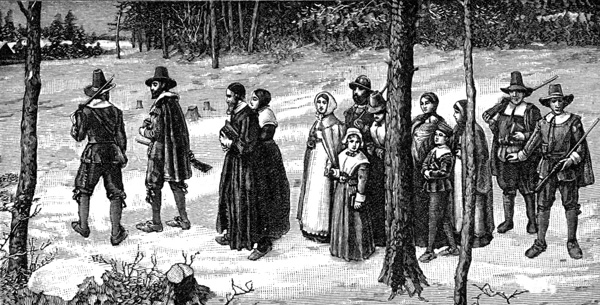
The new settlers of Plymouth Colony fit broadly into three categories: Pilgrims, Strangers, and Particulars. The Pilgrims were a Puritan group who closely followed the teachings of John Calvin. The name “Pilgrims” was not used by the settlers themselves. Longtime Puritan member and later Governor of Plymouth, William Bradford used the term to describe the group in his book Of Plymouth Plantation 1620-1647. However, he was using phrase commonly as to define themselves as travelers on a religious mission. The Pilgrims referred to themselves as the Saints, First Comers, Ancient Brethren, or Ancient Men.
The second group was called “Strangers.” These were non-Puritan settlers placed on the Mayflower by the Merchant Adventurers to provide various skills needed in establishing a colony. This term also included later settlers who came to the colony for varied “colony business” yet did not adhere to the Pilgrim religious ideals.
A third group was known as the “Particulars.” This group consisted of later settlers who paid their own “particular” way to America, and thus were not obligated to pay the colony’s debts.
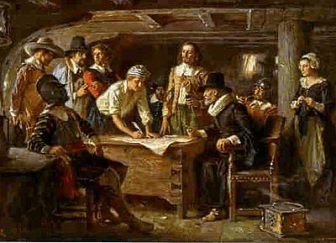
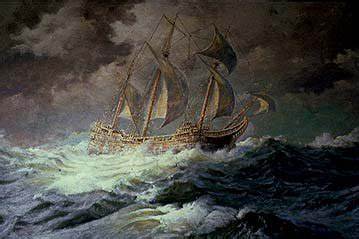
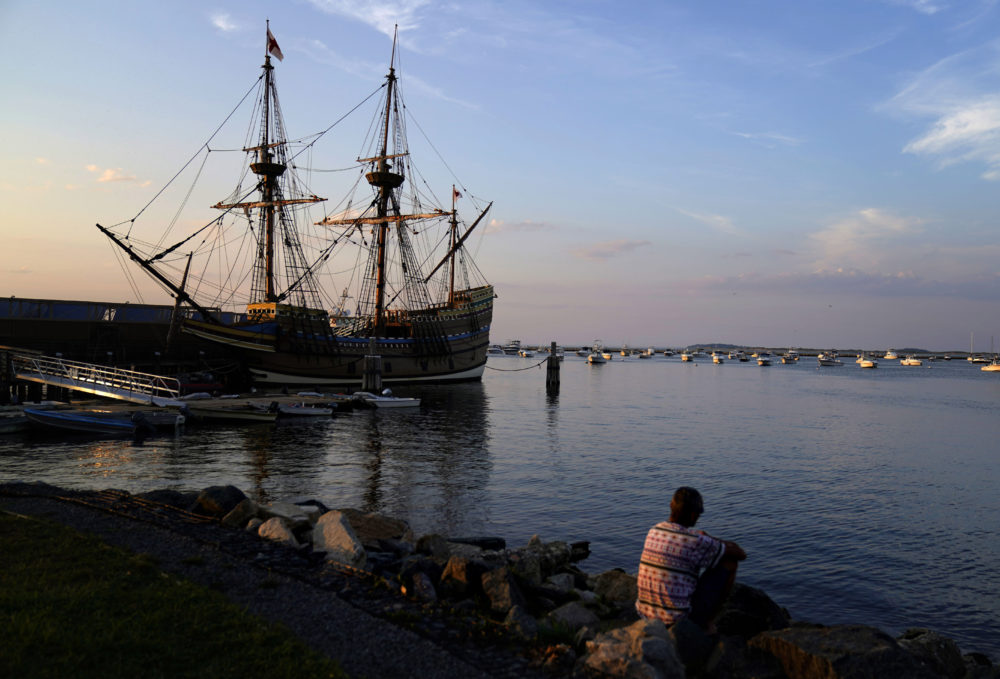
Not surprisingly, the presence of the outsiders annoyed the Pilgrims to no end. Problems began almost immediately. Simply surviving the voyage over with limited supplies, sickness and too small spaces was treacherous. The Mayflower anchored in what would later be Provincetown Harbor on November 11, 1620. Some of the Strangers began to question the Saints’ authority there since none of them had legal permission to be there. (The Mayflower was not supposed to land in Provincetown, but further south in Virginia. Weather, sickness and valid concerns of ship-wrecking forced a shift in plans.) The Mayflower Compact was signed in harbor before landing to address the Strangers concerns yet conflicts persisted.
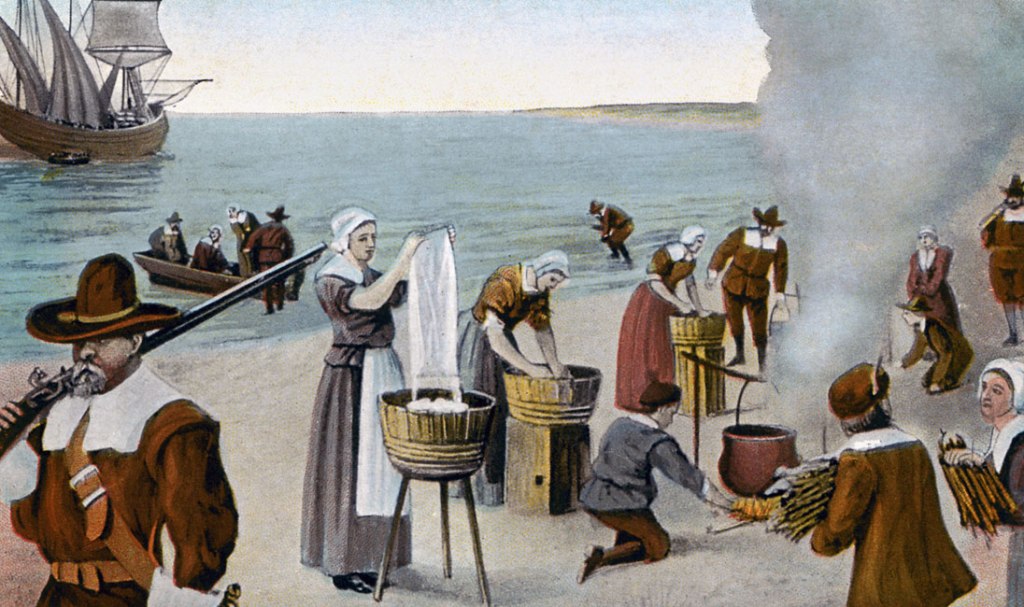
Differences in religion, personal discipline and work ethic were challenging. The Pilgrims and the Strangers bickered over the celebration of Christmas. The day held no particular significance for the Pilgrims. They viewed Christmas as pagan holiday and did not engage in such frivolity. The Strangers felt otherwise.
In response to the ongoing friction, a group of Strangers founded the nearby settlement of Wessagussett. The Pilgrims were greatly distressed by these Strangers’ lack of discipline, both emotionally and in regards of resources. The Saints viewed the eventual failure of the Wessagussett settlement as Divine Providence against a sinful people. Ouch!
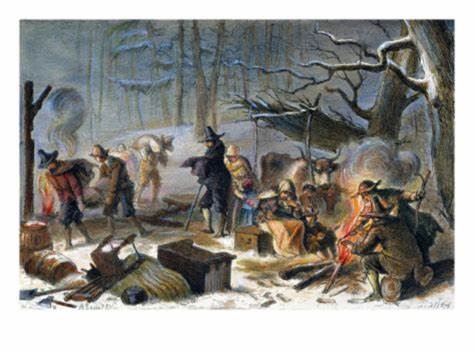
Needless to say, getting along with your neighbors has been a problem as old as time…but the Pilgrims, Strangers and Particulars needed each other. For safety. For food. For building community. And so they did.
 The Pilgrim's Granddaughter
One response to “Plymouth Colony: Pilgrims, Strangers and Particulars”
Love your work
So insightful and interesting
LikeLike